A Marathon motor cannot be judged for continuous operation from its brand name or horsepower alone. You need to verify the nameplate, match the motor to the machine’s torque and speed profile, confirm VFD compatibility where applicable, and check the installation conditions before approving the selection.
Key takeaways
- Check duty rating, insulation class, service factor, voltage, frequency and enclosure on the nameplate.
- Match motor torque and speed to the machine, including acceleration and starting load.
- Set VFD limits from the motor’s rated frequency, voltage, current and cooling method.
- Record vibration, temperature, current and insulation results to detect deterioration early.
What must you verify on a Marathon motor nameplate before calling it continuous-duty
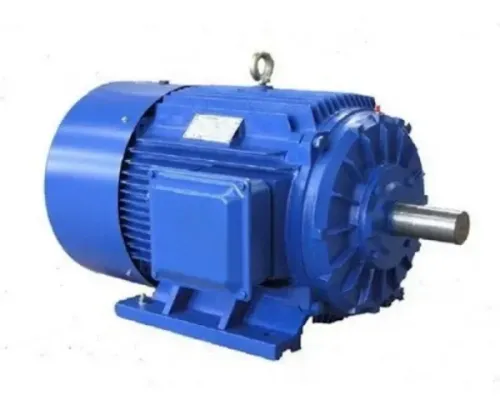
A specific Marathon motor is a continuous-duty motor only when its nameplate data matches the proposed load and environment. Obtain the Marathon motor specifications, then record:
- Model number, rated power, voltage, frequency, phase, full-load current and rated speed
- Efficiency class, frame size, enclosure and insulation class
- Service factor, mounting arrangement, shaft dimensions and terminal-box details
S1 duty means operation at constant load until thermal equilibrium. It does not authorise every load level indefinitely.
| Check | What to verify | Why it matters |
|---|---|---|
| Load and heat | Load level, permissible temperature rise, ambient temperature and altitude | A rated motor can overheat when the site is hotter, higher or more heavily loaded than its rating assumes |
| Cooling and enclosure | Enclosure type, cooling method and ventilation clearance | A TEFC motor loses cooling capacity when airflow is restricted |
| Service factor | Treat the NEMA service factor as limited reserve, not a continuous overload allowance | Using it raises current, temperature and mechanical stress; it may not apply with a VFD, abnormal voltage, abnormal frequency or high ambient temperature |
| Efficiency | Compare IE1–IE5 ratings under identical IEC 60034-30-1 rating conditions and use the same IEC 60034-2-1 loss-determination method | Different test bases can make efficiency figures look comparable when they are not |
For a final thermal decision, compare the actual duty cycle, load, temperature, altitude, enclosure and cooling method together. A nameplate marked S1 cannot compensate for poor cooling or excessive load.
How to match the motor to the machine’s torque, speed and starting demands
Start motor-to-machine matching with the driven shaft, not the motor’s kW rating. Record required output RPM, running torque, starting torque, load inertia, starts per hour, acceleration time, load profile and available supply voltage.
- Calculate approximate torque with T = 9550 × P/n, where T is N·m, P is kW and n is r/min. For a geared motor, multiply the result by gearbox efficiency.
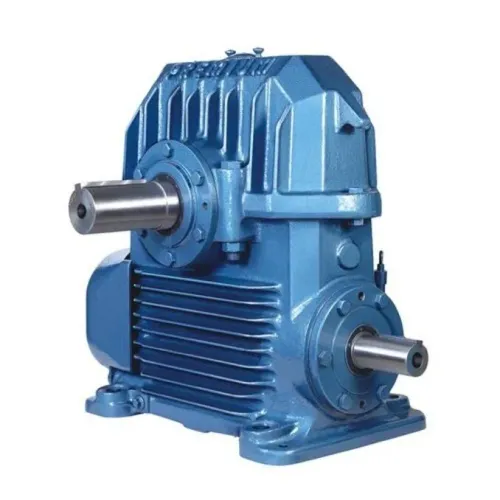
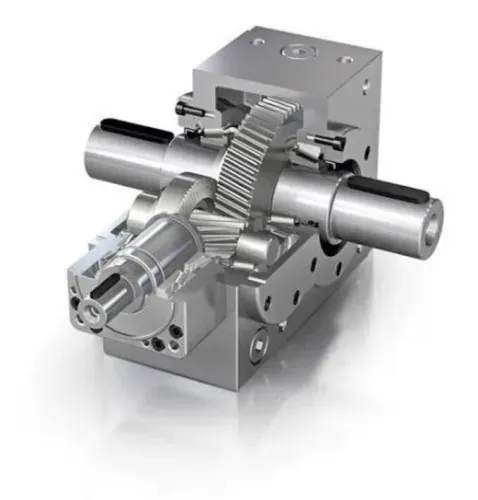
- Check the reducer’s permissible output torque, thermal capacity, overhung-load rating and service factor separately. A gearbox can transmit the torque mechanically yet overheat at low output speed, high ambient temperature or frequent starts and stops.
| Option | What it does | When it fits |
|---|---|---|
| Direct-coupled motor | Avoids reducer losses | Use when motor speed already matches the machine |
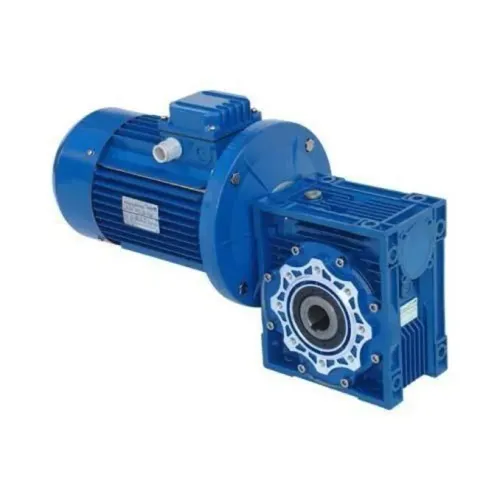
| Geared motor | Produces lower output speed and higher torque | Use when the machine needs reduction |
| VFD-controlled motor | Changes speed electronically | Use for variable-speed duty, with drive-compatible motor and cooling checks |
A six- or eight-pole induction motor runs below synchronous speed because of slip; speed falls further as load increases. Do not use nameplate synchronous speed as the actual machine speed.
VFD speed control can reduce energy use on centrifugal fans and pumps: torque varies approximately with speed squared and power with speed cubed. Those affinity-law savings do not apply to conveyors, positive-displacement pumps, hoists or extruders, which require their actual load torque and acceleration calculations.
A geared motor selection that ignores inertia or starting torque can stall, trip protection or damage the reducer.
How to run a Marathon motor continuously from a VFD without overheating it
A motor that runs reliably on a sine-wave supply is not automatically a VFD-compatible motor. Confirm that its insulation system withstands PWM insulation stress, fast voltage rise time, reflected-wave peaks and common-mode voltage; use NEMA MG 1 Part 31 as the reference for inverter-fed motor construction and application.
1. Record motor-to-drive cable length as a system parameter, including cable construction, shield or armour, grounding method, switching frequency and motor-terminal voltage. Check the VFD maker’s maximum lead length against those details and any installed dV/dt filter or sine-wave filter; the motor catalogue rating alone does not set a safe cable limit.
2. Set the drive’s minimum operating frequency from the motor maker’s VFD data. A standard TEFC fan moves less air as shaft speed falls, so sustained low-speed, high-torque duty requires current-based derating or separately powered ventilation. Otherwise, the motor can overheat while current remains within the nominal limit.
3. Program acceleration and deceleration ramps, an application-appropriate current limit and independent motor thermal protection. Do not treat the VFD’s electronic overload function as the only protection, and do not use the service factor as permission for continuous overload.
4. Check common-mode voltage for bearing-current risk. Use a shaft-grounding device, insulated or hybrid bearings, a bonded high-frequency grounding path and suitable output filtering as a coordinated system; one insulated bearing alone does not control every current path.
5. For overhauling loads or rapid stops, specify a braking resistor, regenerative drive, controlled ramp or mechanical brake. Increasing motor size does not remove energy returned to the DC bus or prevent an overvoltage trip.
How to compare Marathon with Siemens, Havells, ABB and replacement options
Equal horsepower does not prove motor replacement compatibility. The frame, shaft, mounting-hole pattern, rotation, terminal layout and actual full-load current must match before you call a motor a drop-in replacement.
| Check | Compare |
|---|---|
| Electrical | IE efficiency class; rated voltage and frequency; full-load current; phase; service factor |
| Mechanical | Frame size; foot and flange dimensions; shaft diameter and extension; keyway; mounting-hole pattern |
| Construction | Enclosure; insulation class; bearing arrangement; terminal-box position; rotation |
| Drive and supply | VFD approval, minimum frequency and written operating conditions |
| Supply continuity | Availability, warranty terms, repair support and replacement lead time |
Use the same IEC 60034-30-1 rating conditions and IEC 60034-2-1 loss-determination method when comparing Marathon vs Siemens, Marathon vs Havells or Marathon vs ABB. A higher IE label does not erase base changes, coupling work or an incompatible shaft.
Calculate lifecycle cost, not purchase price alone. Include electricity, coupling or base changes, spare-motor inventory, bearing and rewinding work, downtime and warranty response.
If Marathon documentation is incomplete, request these items:
- Model-specific datasheet and certified dimensions
- Test information, efficiency test basis and a clear nameplate photograph
- Spare-parts policy and written VFD conditions
Perfect Engineering Solutions can compare Marathon, Siemens, Havells, ABB and other available options against your measured dimensions, current, load and supply instead of selecting a brand by horsepower alone.
What to check during installation and ongoing condition monitoring
1. Measure all three phase-to-phase voltages at the motor terminals under operating load, not only at the switchboard. Calculate voltage unbalance and correct loose connections, unequal cable impedance, overloaded phases or supply faults; a small voltage unbalance can create a much larger current unbalance, causing damaging heating.
2. Complete the motor commissioning checklist before coupling the load: verify shaft alignment, eliminate soft foot, inspect coupling fit and guard, confirm foundation stiffness, torque cable terminations, test earthing, preserve ventilation clearance, confirm rotation, and set the overload relay or thermal protection to the motor’s actual full-load current and application.
3. Identify protection by purpose. TEFC describes a totally enclosed, fan-cooled construction; an IEC 60529 IP rating describes resistance to ingress; IECEx or ATEX approval addresses explosive atmospheres. An IP55 label alone does not authorise installation in a hazardous area.
4. Establish a running baseline for current, vibration, bearing temperature, winding temperature and operating speed. Use IEEE 43 insulation testing for insulation-resistance and polarization-index measurements, recording test voltage, duration and winding temperature; compare temperature-corrected results with machine history, not a single pass/fail threshold.
5. Review trends after every major start, load change and VFD adjustment. Rising current, vibration or temperature demands investigation before failure; inspect alignment, cooling, bearings, supply quality and drive settings rather than simply resetting the overload. Recheck the motor terminals whenever operating conditions change.
Frequently asked questions
What must you verify before calling a Marathon motor continuous-duty?
Read the nameplate for duty rating, rated power, voltage, frequency, full-load current, speed, service factor, insulation class, enclosure and ambient-temperature limits. Continuous operation is suitable only when these values match the load and site conditions.
How do you match a Marathon motor to the machine?
Compare the motor’s rated torque and speed with the machine’s required torque across its operating range. Check acceleration time, starting torque, inertia, overload demand and the motor’s starting method before selecting the motor.
How can you run a Marathon motor continuously from a VFD without overheating it?
Program the VFD with the motor’s nameplate voltage, current, frequency and speed. Respect the motor’s base frequency and minimum-speed cooling limits, use an independent blower when required, and apply the correct overload protection.
How does Marathon compare with Siemens, Havells and ABB motors?
Compare the exact model’s efficiency class, frame size, mounting dimensions, duty rating, enclosure, insulation system, warranty, documentation and local service support. A replacement must also match shaft dimensions, connection details and electrical ratings.
What should you check during installation and condition monitoring?
Confirm alignment, base rigidity, coupling fit, terminal connections, earthing, phase sequence, ventilation and protective-device settings. Track vibration, bearing temperature, winding temperature, current balance, noise and insulation resistance over time.