Industrial machinery frequently needs to transmit substantial torque while changing the direction of power between the motor and driven equipment. A Bevel Helical Gearbox is commonly considered where right-angle transmission, efficient power transfer, and robust mechanical operation are required.
For textile machinery, conveyors, material handling systems, processing plants, and machine-building applications in Tirupur, Tamil Nadu, understanding gearbox characteristics can help engineers evaluate whether this configuration fits the application.
How the Gear Arrangement Works
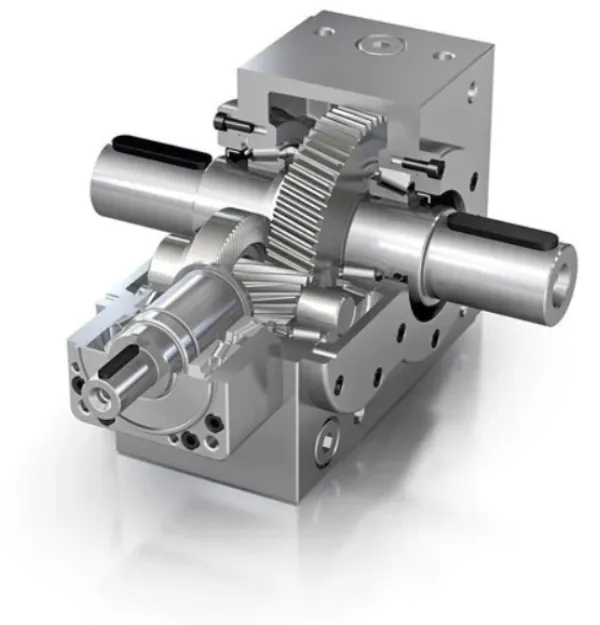
A bevel helical unit combines bevel gearing with helical gear stages.
The bevel stage changes the direction of power transmission, commonly by 90 degrees, while the helical stages provide the required reduction ratio and torque multiplication.
This arrangement can offer a compact solution when machine layout does not allow the motor and driven shaft to remain on the same axis.
Why Torque Requirements Matter
A gearbox converts motor speed and torque to values suitable for the driven machine.
Higher reduction generally produces lower output speed and greater output torque, subject to efficiency and gearbox limitations.
Selection should consider more than nominal motor power. Engineers need to determine actual output torque requirements, peak loading, shock loads, operating hours, and service factor.
For conveyors carrying variable loads, for example, starting conditions can be significantly more demanding than steady operation.
Compare Gearbox Options by Application
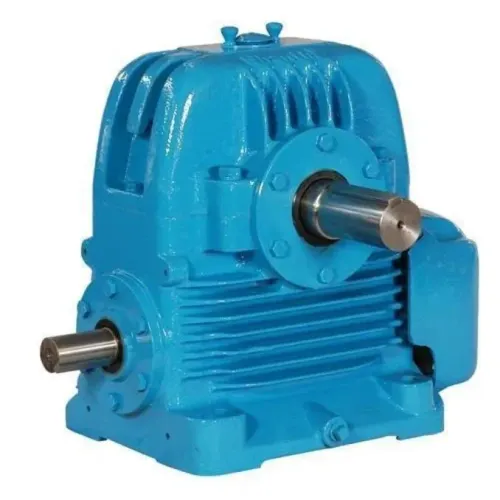
Worm gearboxes can be useful where compact right-angle arrangements and relatively high reduction ratios are needed. Helical gearboxes are widely used for efficient parallel or inline transmission. Bevel helical configurations become particularly relevant where high-torque right-angle transmission and efficiency are important.
No gearbox type is universally superior.
The appropriate choice depends on:
- Ratio
- Torque
- Space
- Mounting position
- Duty
- Efficiency
- Noise requirements
- Maintenance expectations
- Cost
Service Factor Should Not Be Ignored
A gearbox operating a lightly loaded machine for a few hours each day experiences different stresses from one driving a heavily loaded conveyor continuously.
Service factor accounts for application severity and operating conditions. Shock loading, frequent starts, long operating hours, and variable loads may require additional capacity.
Selecting only according to motor kW can therefore produce an inadequate gearbox.
Lubrication and Installation Affect Reliability
Correct lubrication is essential for gears and bearings.
The lubricant grade, quantity, replacement interval, and mounting orientation should follow the gearbox manufacturer's requirements.
Alignment also deserves attention. Poor shaft alignment can create additional loads on bearings, couplings, and gearbox components.
Perfect Engineering Solutions supplies industrial motors, gearboxes, drives, and power transmission solutions for engineering requirements. Machine builders and manufacturing businesses around Tirupur evaluating a Bevel Helical Gearbox should provide output speed, torque, motor details, mounting arrangement, operating hours, and load characteristics when determining specifications.
A gearbox should ultimately be selected as part of the complete drive train. Motor characteristics, coupling, gearbox ratio, output shaft arrangement, driven load, and control method all influence how reliably the system performs under real production conditions.
Keywords